
If you’ve been in ministry for a while, you may have noticed how easy it is for a church to stray from its original purpose. Mission drift happens subtly and over time, but if it’s not addressed it can lead your church down a well-worn path towards irrelevance. This can lead to churches getting really good at things that don’t really matter.

One way to fight against this trend is to establish church values. Creating clear values will help clarify direction, determine resource allocation and determine priorities. They are a foundational component of any church culture.
The same is true for creating values for your ministry staff. As with a congregation, a church staff can forget the reason they do what they do. So, establishing staff values reminds everyone in the room what your staff is really all about. They are great, written reminders of the “rules” by which your staff agrees to operate. Here are six staff values to consider implementing with your church staff.
Love people
Loving people is really the bottom line of ministry. Jesus said love God, love others. That’s it. Ministry should always focus on loving people with the love of Christ. When your staff makes decisions that affect your church, always ask, Is this about loving people? The answer will determine your next steps. Continue reading
 These three factors all relate to the employee / boss relationship. If your boss doesn’t really know you, if he doesn’t let you know you matter, if she doesn’t give you goals and guidelines by which to measure your work, you’ll most likely end up miserable.
 Use Email R-Codes
 In Jim Collin’s classic book, Good to Great, he introduces readers to the idea of a Hedgehog Concept. Collins says the idea came from a famous essay by Isaiah Berlin called “The Hedgehog and the Fox.” It’s based on the ancient Greek parable: “The fox knows many things, but the hedgehog knows one big thing.” The fox uses multiple ideas and numerous strategies in its battles with the hedgehog. But, says Collins, the hedgehog always wins by using one simple, surefire approach – curling up into a ball. When the hedgehog employs this defensive position, it exposes his sharp spikes to deter attacks from predators. Despite the many and varied tactics the fox uses, the hedgehog always emerges victorious by using his one, focused strategy.
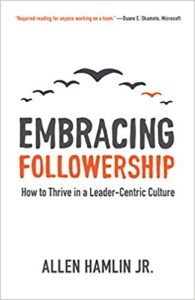 Allen Hamlin Jr’s book Embracing Followership – How to Thrive in a Leader-Centric Culture is a fascinating look at the unique nature of followership, its relation to leadership, and the critical way it builds the kingdom and enhances the body of Christ. This work dives into the topics of influence and authority, formal and informal power structures, and is reminiscent of John Maxwell’s 5 Levels of Leadership, Mike Bonem & Roger Patterson’s Leading From The Second Chair, and Clay Scroggin’s How To Lead When You’re Not In Charge. However, Hamlin’s approach is unique in that it focuses specifically on the follower. Here are three areas that stood out to me.
 Typically, reasons are given. You’ll probably disagree with most of them. Other times the much more ambiguous “no longer a good fit” explanation is offered. That’s just confusing.
 I hear so many brilliant and inspiring thoughts each year, I try to tweet them all. But, because I can’t keep up, last year I wrote a blog on the