
In the 1970’s and 80’s small groups began becoming popular in churches. Today, it’s hard to find a church without some sort of small group ministry. In some cases, small groups have replaced Sunday School as the main approach to Christian education and fellowship. In other cases, small groups compliment Sunday School by offering a different environment for teaching and connection.
I’ve spent many years as a Small Groups Pastor. The value of community in the context of a small group is one of my highest priorities. And over years of leading small group ministries, I’ve come across some helpful axioms that help define the purpose of small groups and remind us what small groups are really all about.
Axioms are basically a memorable saying that contain truth. Much like a proverb. Here are three axioms for small groups. Continue reading
 In Jim Collin’s classic book, Good to Great, he introduces readers to the idea of a Hedgehog Concept. Collins says the idea came from a famous essay by Isaiah Berlin called “The Hedgehog and the Fox.” It’s based on the ancient Greek parable: “The fox knows many things, but the hedgehog knows one big thing.” The fox uses multiple ideas and numerous strategies in its battles with the hedgehog. But, says Collins, the hedgehog always wins by using one simple, surefire approach – curling up into a ball. When the hedgehog employs this defensive position, it exposes his sharp spikes to deter attacks from predators. Despite the many and varied tactics the fox uses, the hedgehog always emerges victorious by using his one, focused strategy.
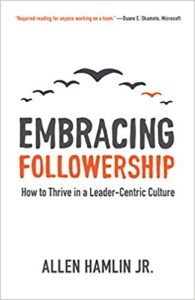 Allen Hamlin Jr’s book Embracing Followership – How to Thrive in a Leader-Centric Culture is a fascinating look at the unique nature of followership, its relation to leadership, and the critical way it builds the kingdom and enhances the body of Christ. This work dives into the topics of influence and authority, formal and informal power structures, and is reminiscent of John Maxwell’s 5 Levels of Leadership, Mike Bonem & Roger Patterson’s Leading From The Second Chair, and Clay Scroggin’s How To Lead When You’re Not In Charge. However, Hamlin’s approach is unique in that it focuses specifically on the follower. Here are three areas that stood out to me.
 Typically, reasons are given. You’ll probably disagree with most of them. Other times the much more ambiguous “no longer a good fit” explanation is offered. That’s just confusing.
 Author Larry Osborne gives us a clue. In Sticky Leaders he says, “If something doesn’t take us toward our mission, it takes us away from our mission, even if it’s a great idea.” If we say yes to too many good ideas, we quickly lose focus. Too many options overwhelm people, divide attention, and dilute impact.
 Some seek to teach complex concepts and be thoroughly understood. Others simply try hard to entertain their listeners. But the most effective communicators seek to influence their listeners to action. Transmitting information is not difficult. But communicating for life change takes a lot more work.
 It’s been said you can’t manage what you don’t measure. And while it seems natural to track results, many church leaders don’t measure effectiveness for fear of finding the answers. Cold, hard facts can reveal painful realities which force us to make difficult decisions. We can either courageously lead our churches through transition, or we can keep the status quo, thinking we’re making progress but actually having little impact.
 You can’t go anywhere without the wind